
Le Dragon Wreck 2019 Project
The Wreck Site Continued.
With Director-General Juan Lopez and Director Francis Soto both from ONPCS, joining the Team for three days, it was a great opportunity to show them both what had been achieved during the survey.
Raimund Krob continued showing them how to use the drone for great effect. The ability for seeing the wreck site from a “birds-eye” view is really useful in enabling the Team to get a full understanding of the wrecking process.
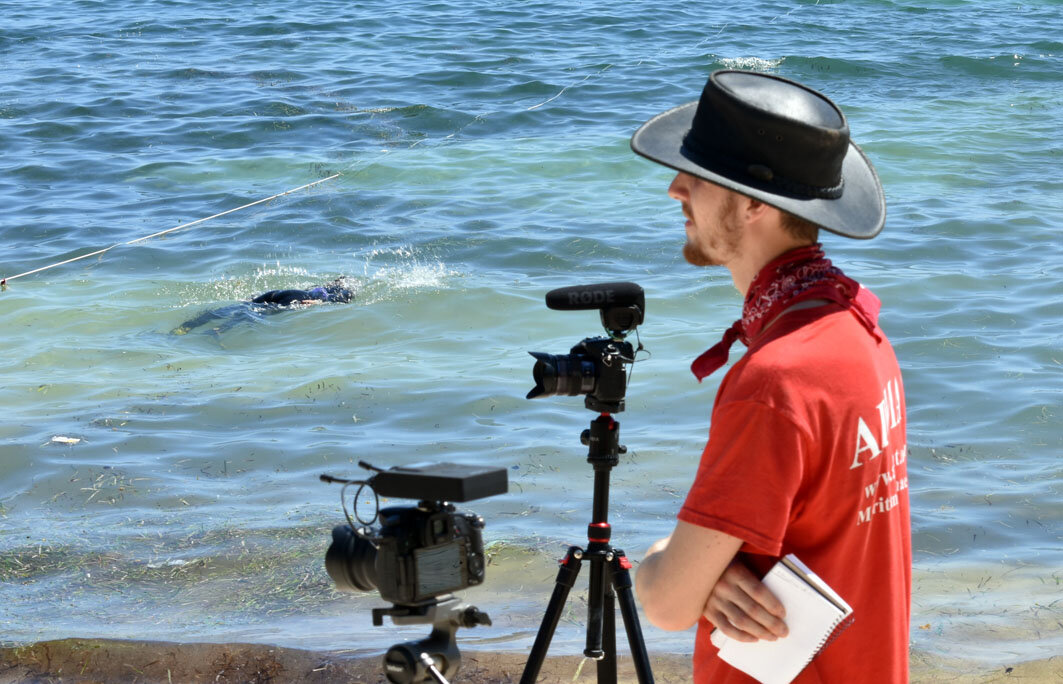
Connor Grzesiak was filming and interviewing some of the team as well as Francis Soto which we were very pleased to have. Francis is used to being filmed and interviewed by National Geographic and had some excellent things to discuss on the wreck of Le Dragon and the protection of underwater cultural heritage in the Dominican Republic. Doing piece to camera on the beach was a challenge with the constant strong wind which tested our new lapel microphones to the fullest.
A three-pounder cannonball was located on the survey grid which would have been the stern section. Talking into account the Voto model Dr Florence Prudhome located and researched as a model of Le Dragon built-in 1783, we now believe that there is a strong chance there were 3 pdr cannons on the quarterdeck as the secondary armament. The model showed these but so far we have no information on them. We know the main armament was 9 pdrs and that these were a set of Carron Scottish cannons and we have the dates that these were made. They were also probably the last batch of “Long Nines” as the following year the caron Iron Company produced a new type of cannon which had a shorter barrel and could fire a heavier ball although over shorter distances. These new cannons which were a mixture of a cannon and mortar were called “Carronades” after the Carron Iron Company in Falkirk Scotland. These cannons were popular with the American Continental Navy as they had less recoil. In action, this enabled the Americans to have more men on deck ready to board and capture the enemy vessel. The Continental Navy had few ships and therefore the process of having prize crews on board to capture the opposing ship was their main strategy.