ADMAT USA
Florida Keys Maritime Archaeological Field School
In The Florida Keys National Marine Sanctuary
Photographs From The 2005 Field School On The Button Wreck
19th July to 9th August 2005
Whilst two weeks seems a long time, it is not. On average the Team only had about 2 hrs on the wreck site each day. This was due to its location and the fact that we would only work in the mornings, as dangerous lightning storms would chase us off the wreck site. In addition it took the Convoy of boats over an hour to get to the site from the port.
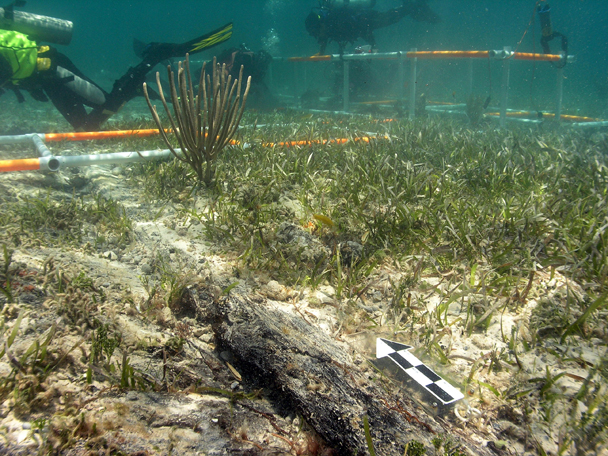
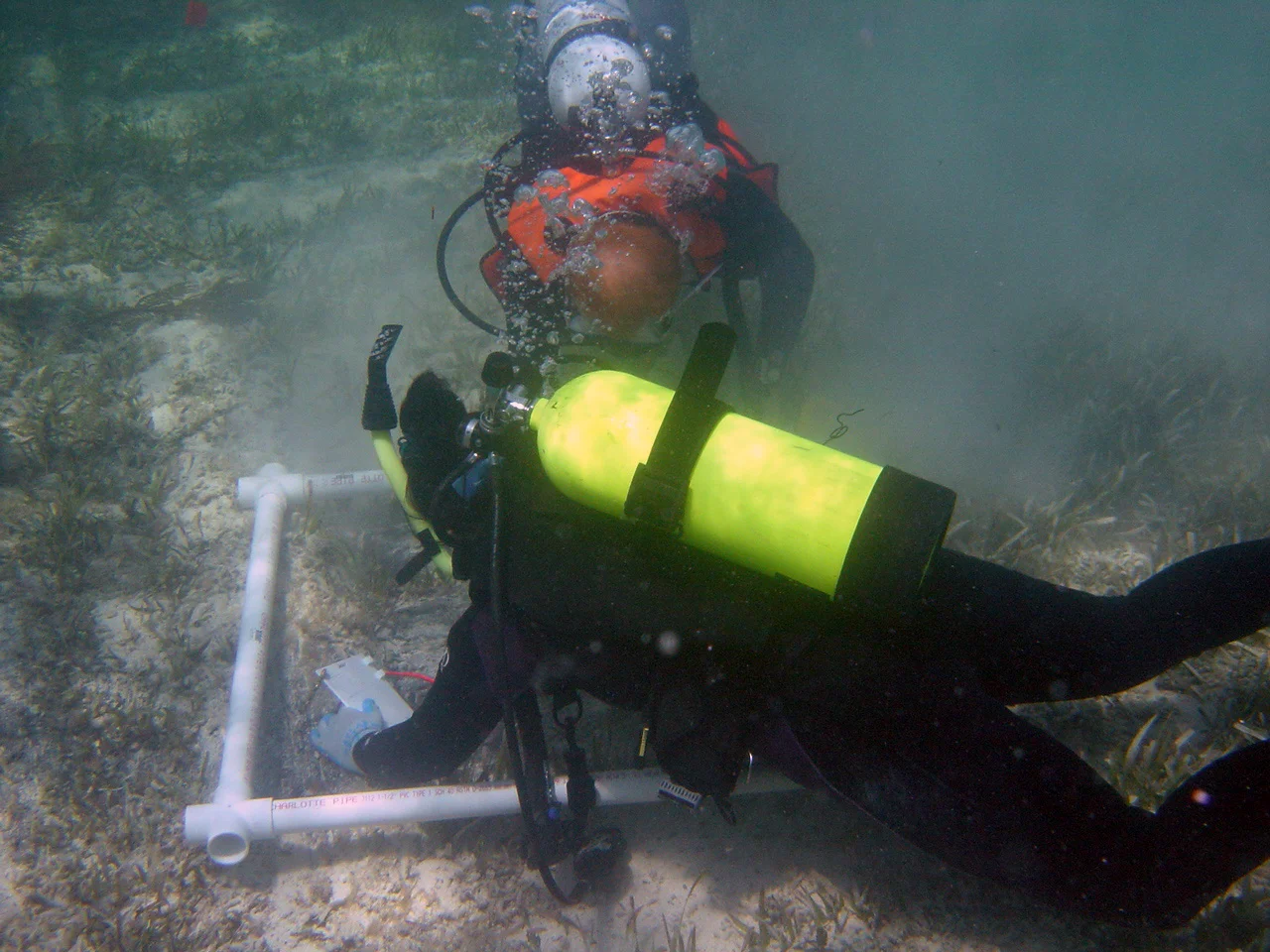
With a few days to spare the Team once the cut off point was reached, started to finalise their measurements and dissemble the grid. All the PVC grid pieces were removed and taken home and the wreck site was covered with sand again by reverse hand fanning.
During the project a number of press reporters visited the site as well as NOAA officials. We were delighted to have Dr. Bruce Terrell, Senior Archaeologist and Chief Historian for NOAA in the Office of National Maritime Sanctuaries as well as Brenda Altmeier from the NOAA's Florida Keys Office who was our excellent day to day contact.
A lot of hard work undertaken by a dedicated Team, to learn more about this interesting shipwreck.