The Island Wreck Site Underwater And Associated Photographs
Page 2
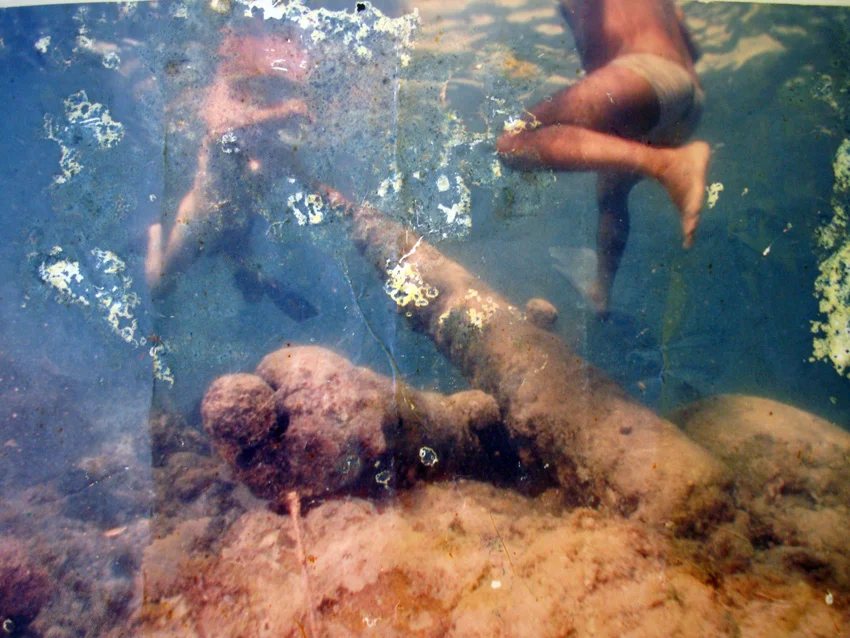
During this survey we noted that some sea urchins were apparently destroying some of the artefacts. We identified the critters as the red rock boring sea urchins called Echinometre Lucunter. These were found eating the granite blocks in the shallows and to our amazement the iron cannons. Tunnels had been bored into the iron by these critters who were found resting at the bottom of the hollows. The Team is conducting further research on this issue and is in contact with NOAA Coral Reef Conservation Program and other leading scientists to find out more about these natural destroyers of underwater cultural heritage.




ADMAT's maritime archaeological work on this wreck site was assisted by ADMAT-FRANCE a non profit organisation based in the Institut de Paléontologie Humaine, Muséum National d’Histoire Naturelle, Paris.
ADMAT-FRANCE is a sub division of the Anglo ~ Danish Maritime Archaeological Team
ADMAT is delighted to have an association with Muséum Nationald’Histoire Naturelle at Paris, départememt Préhistoire, UMR-CNRS 7194.