
Le Dragon Wreck 2019 Project
The Wreck Site Continued.
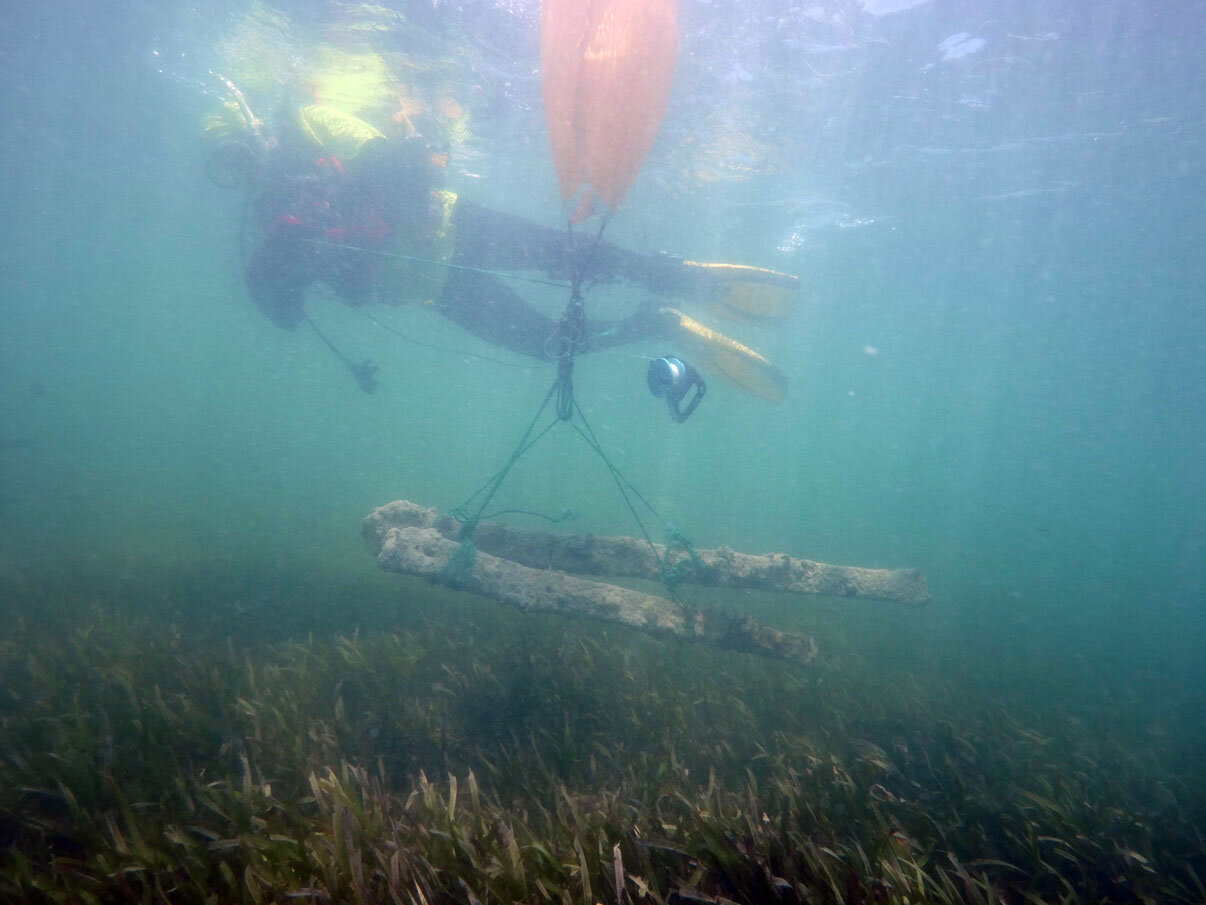
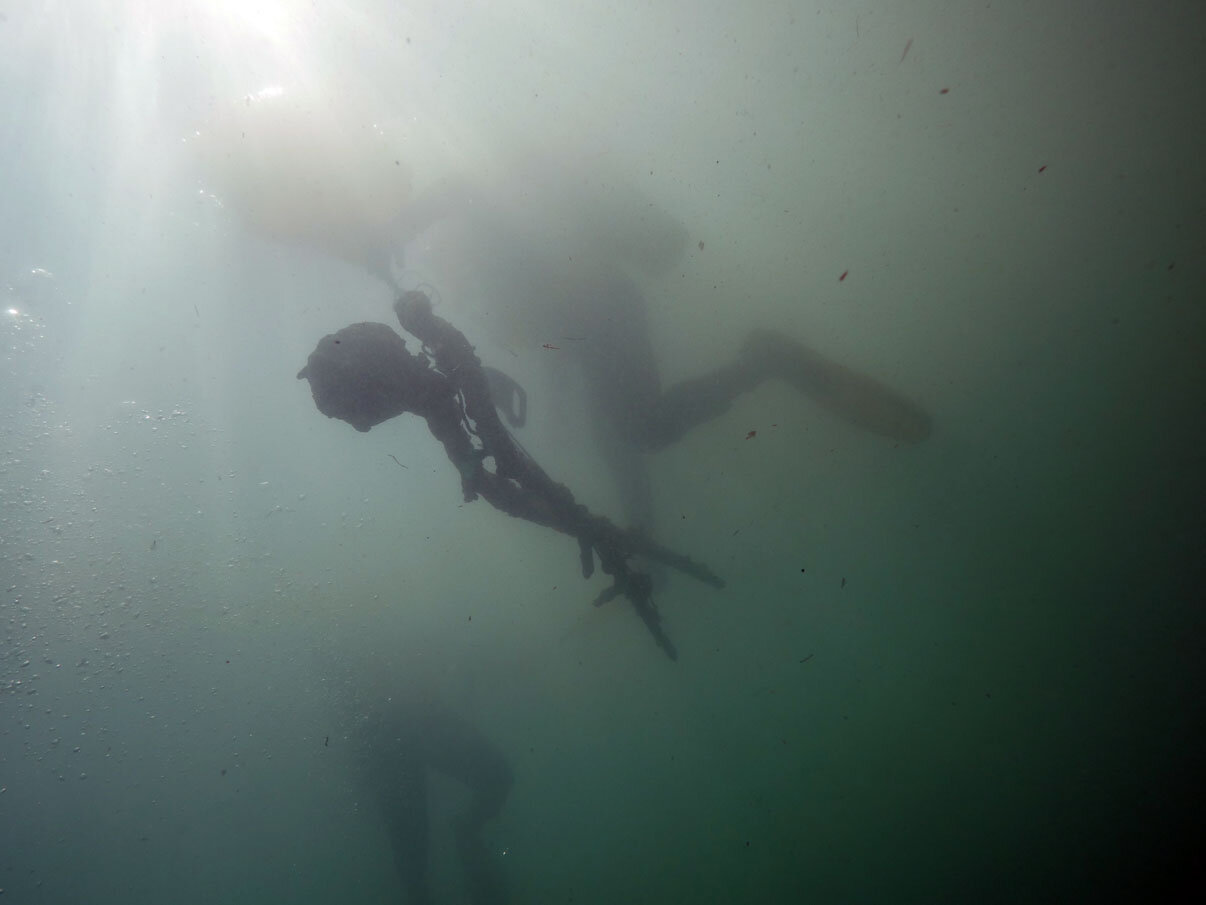
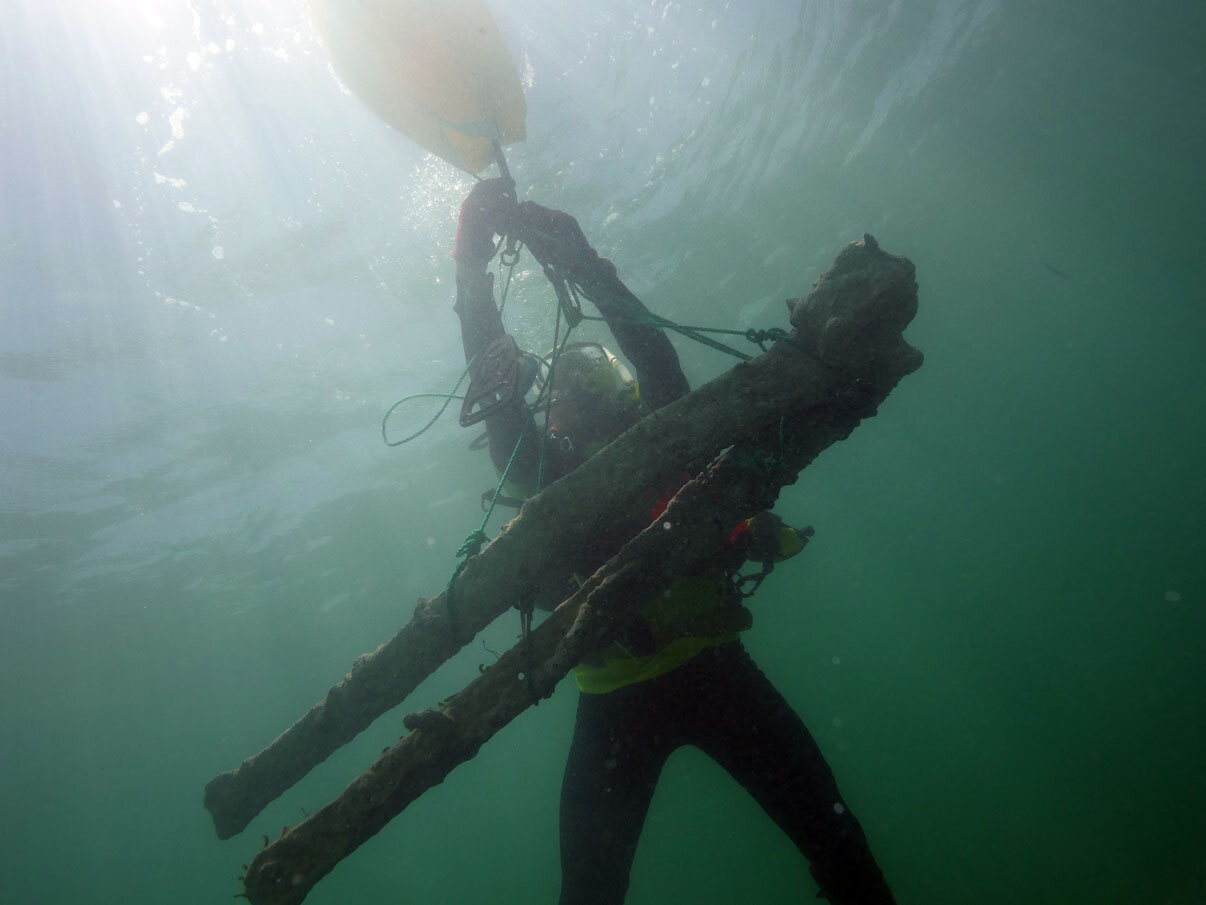
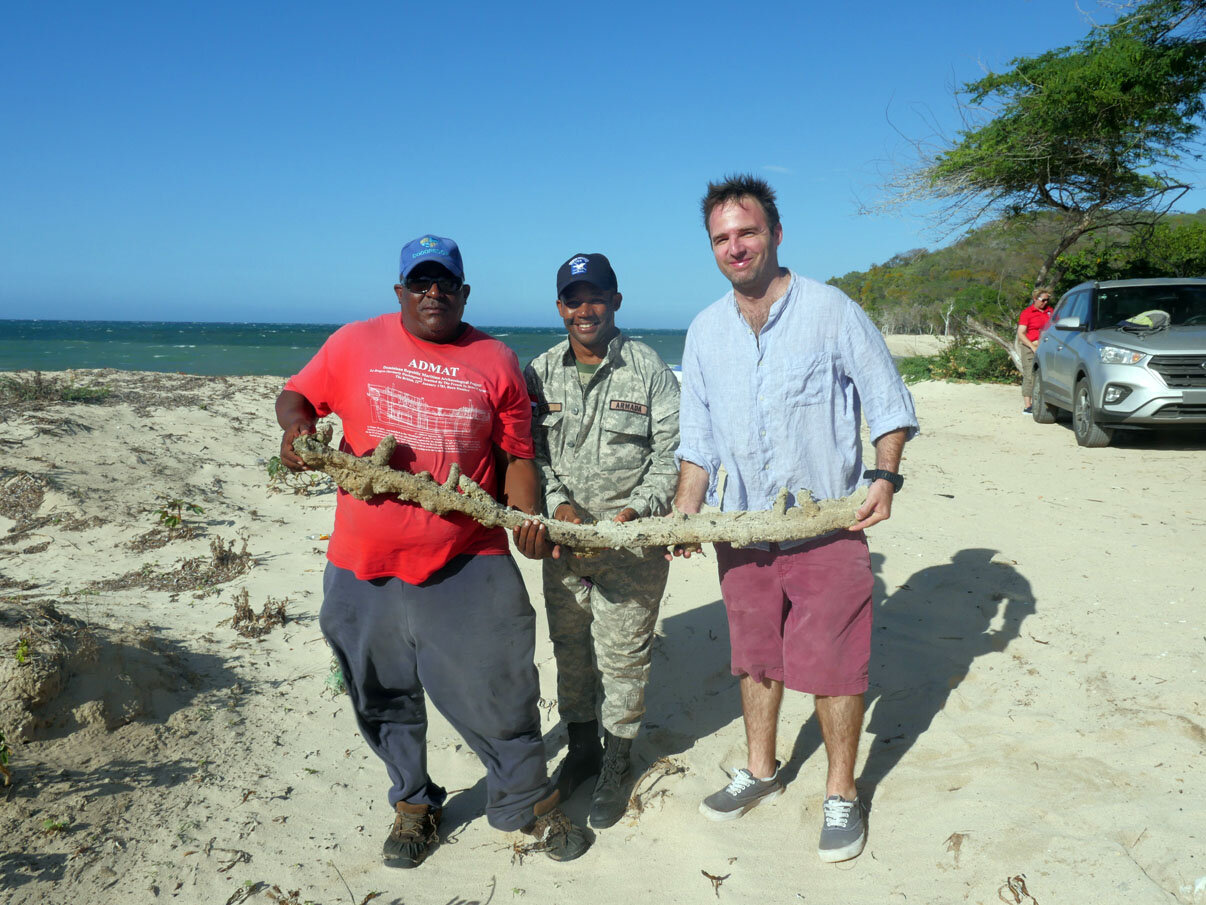
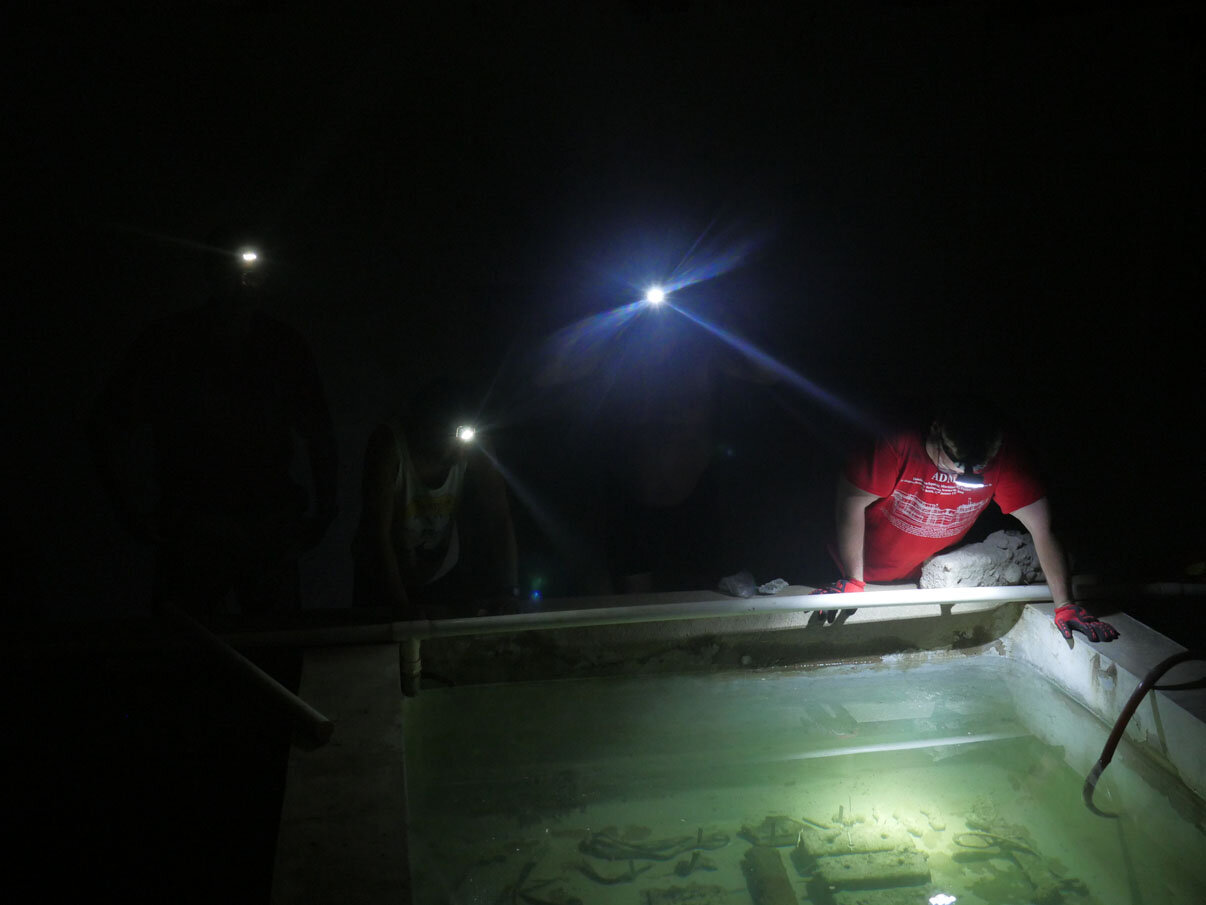
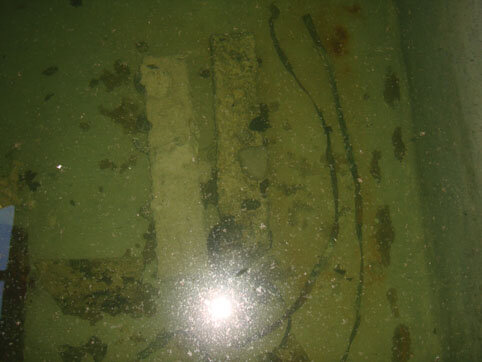
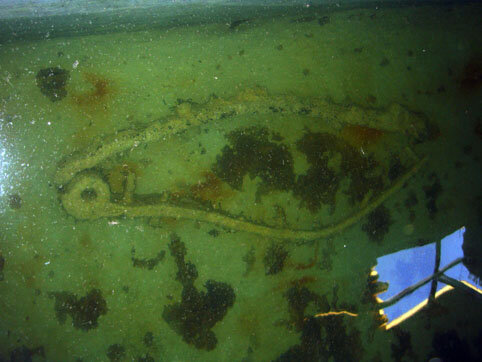
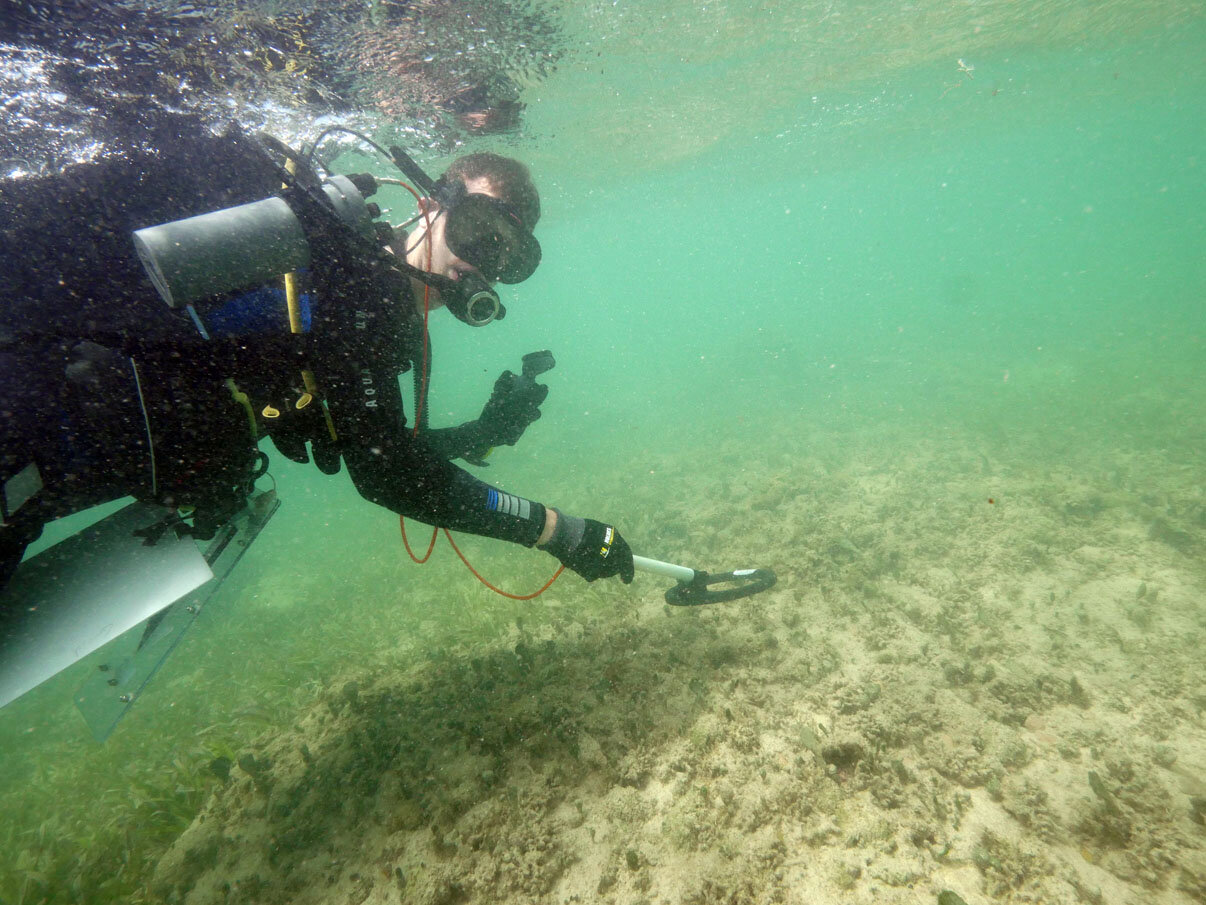
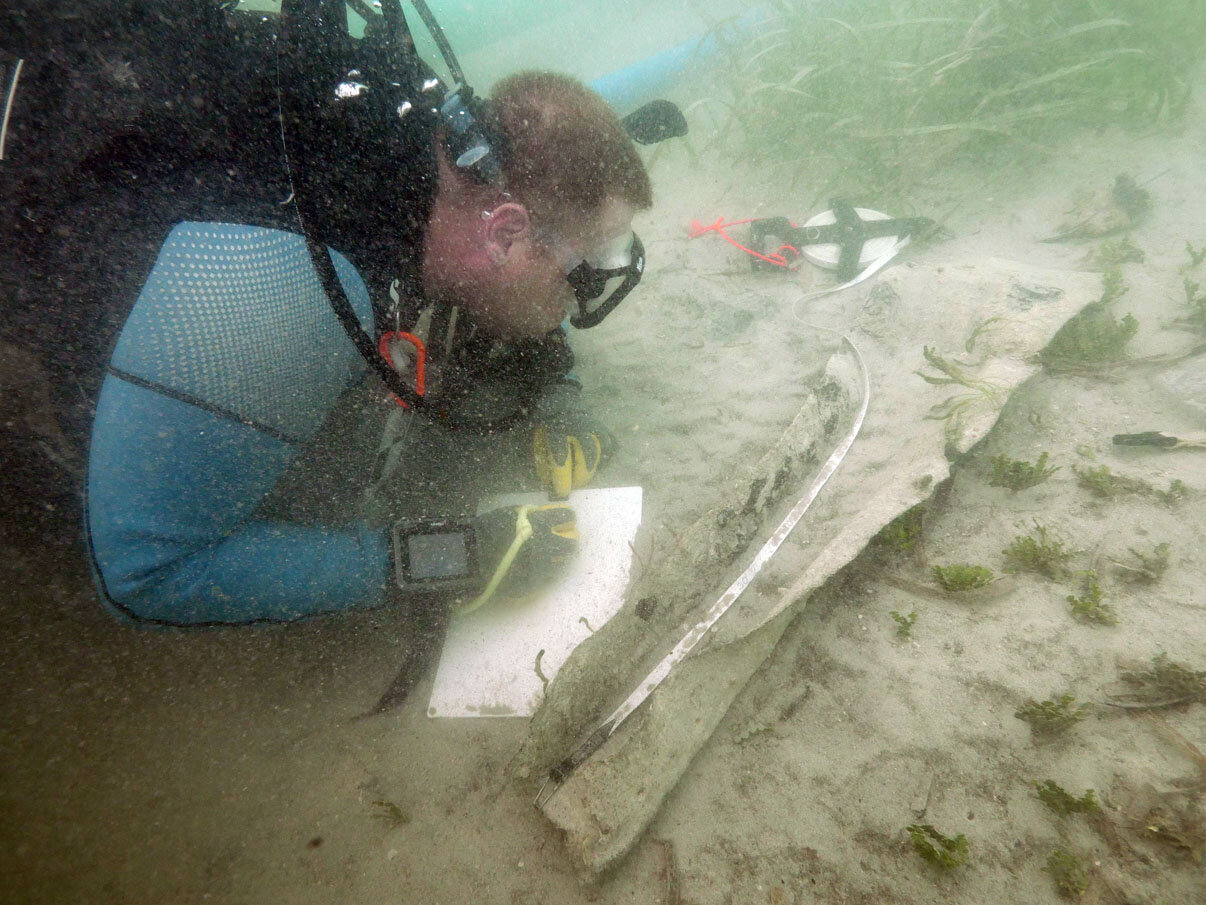
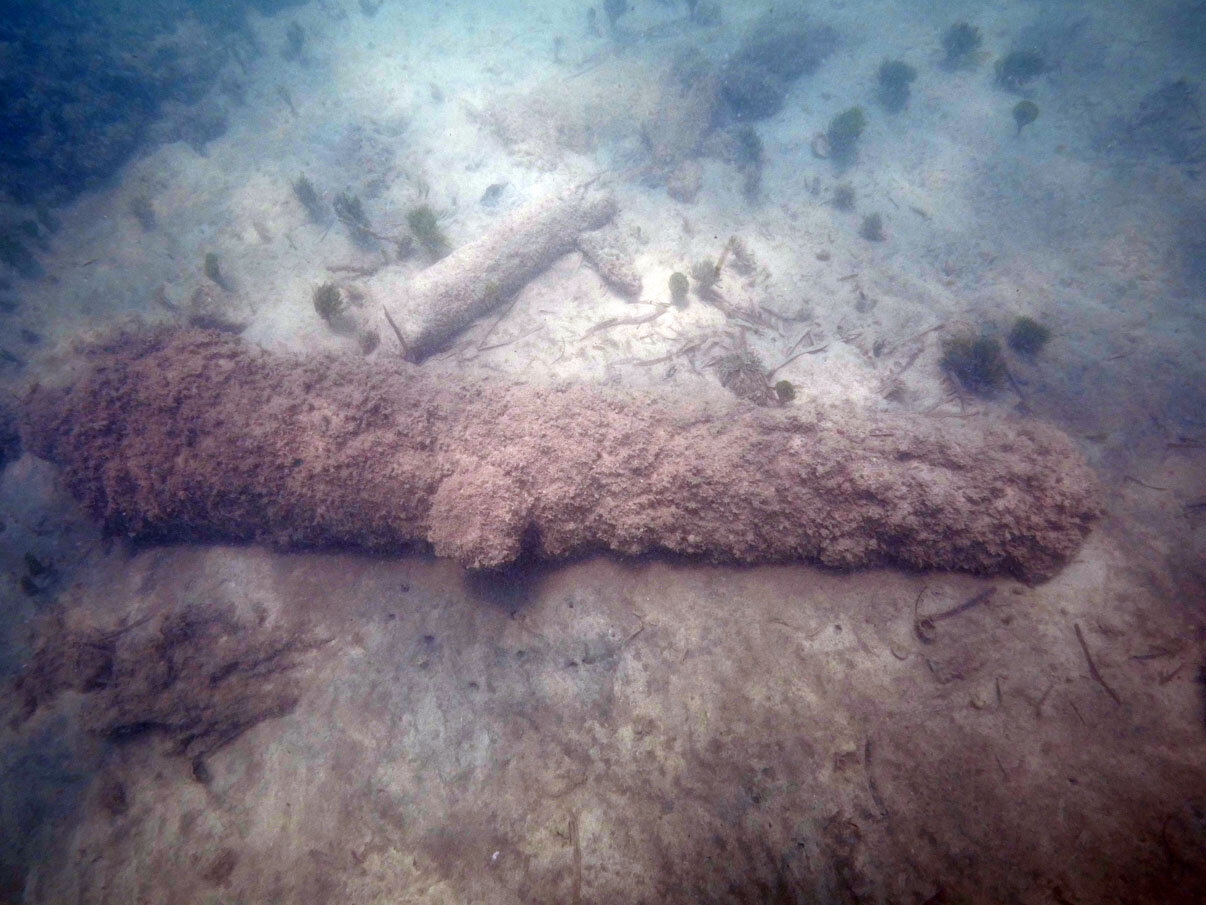
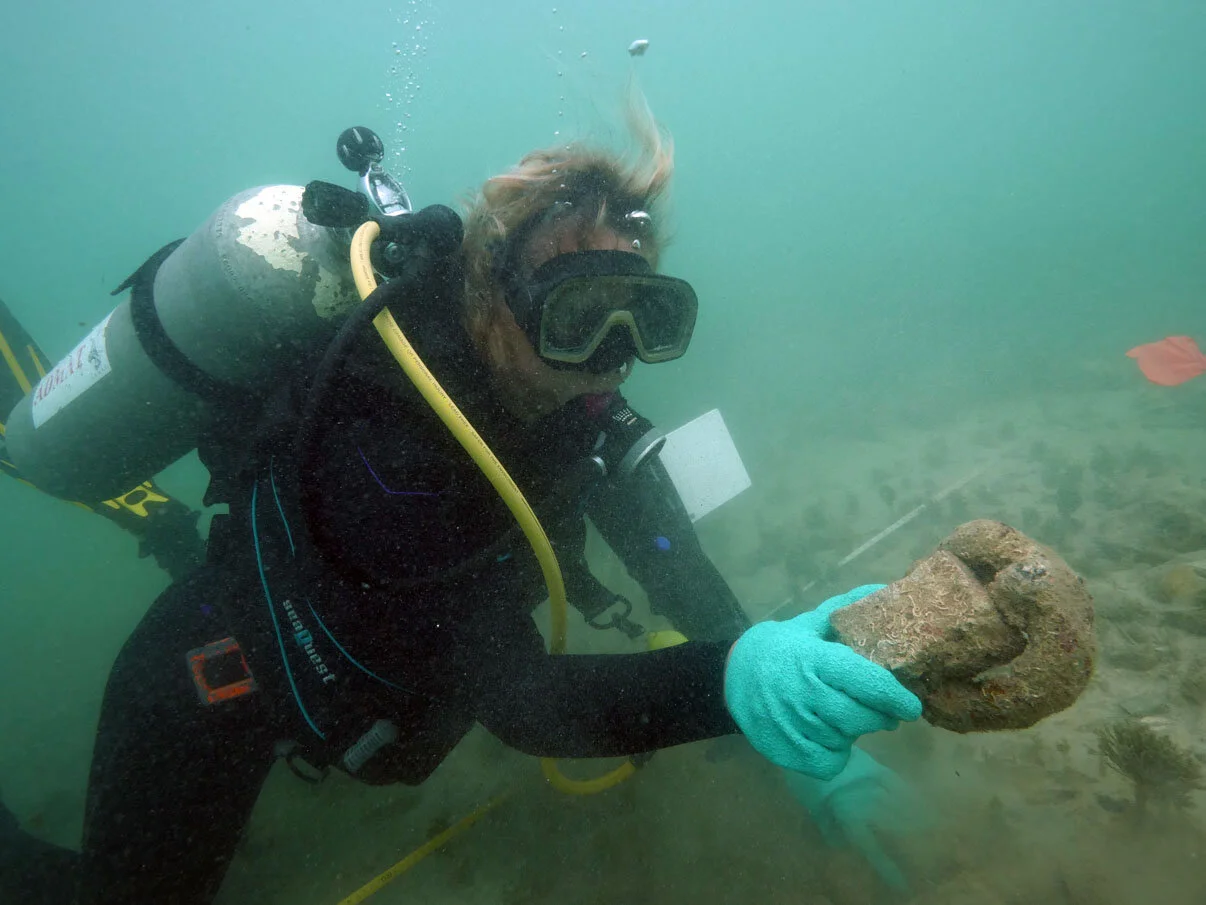
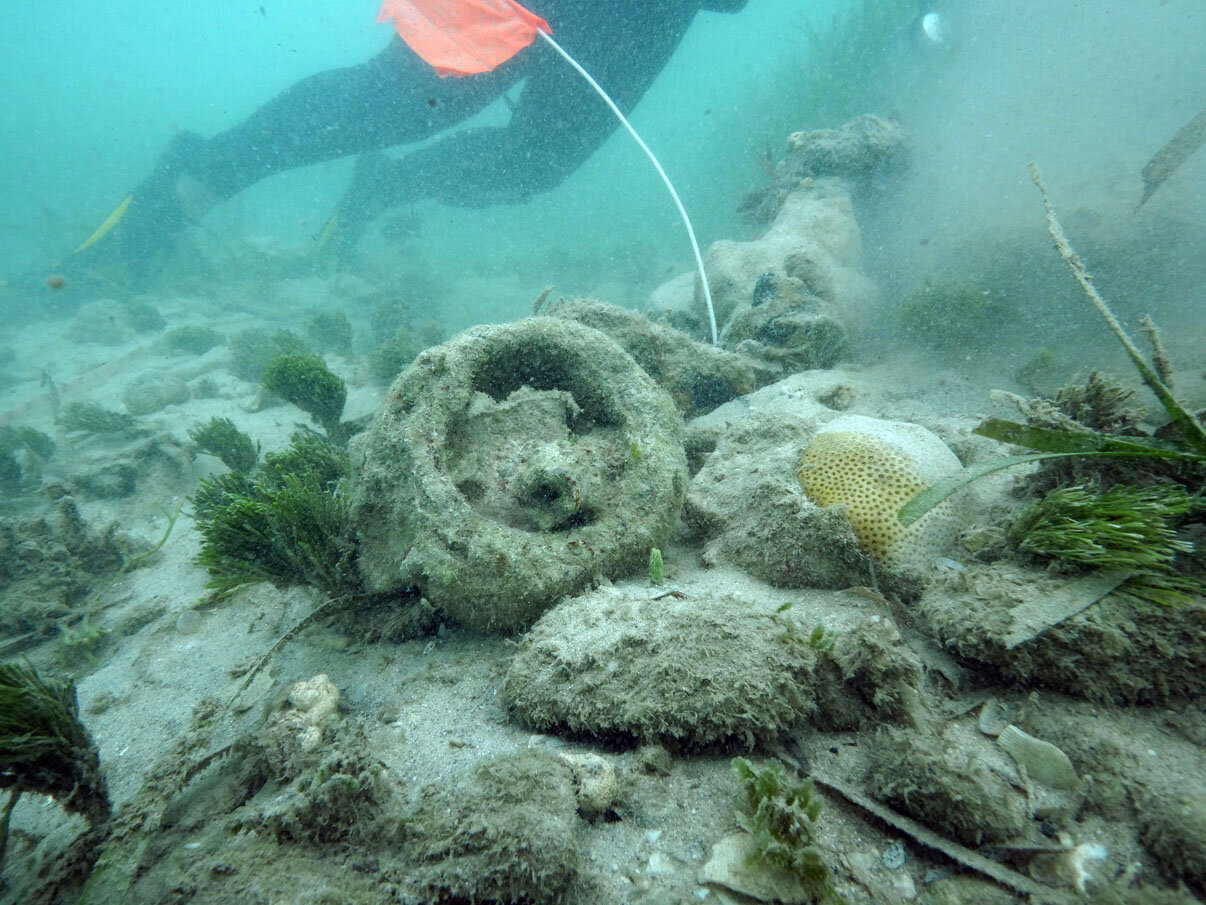
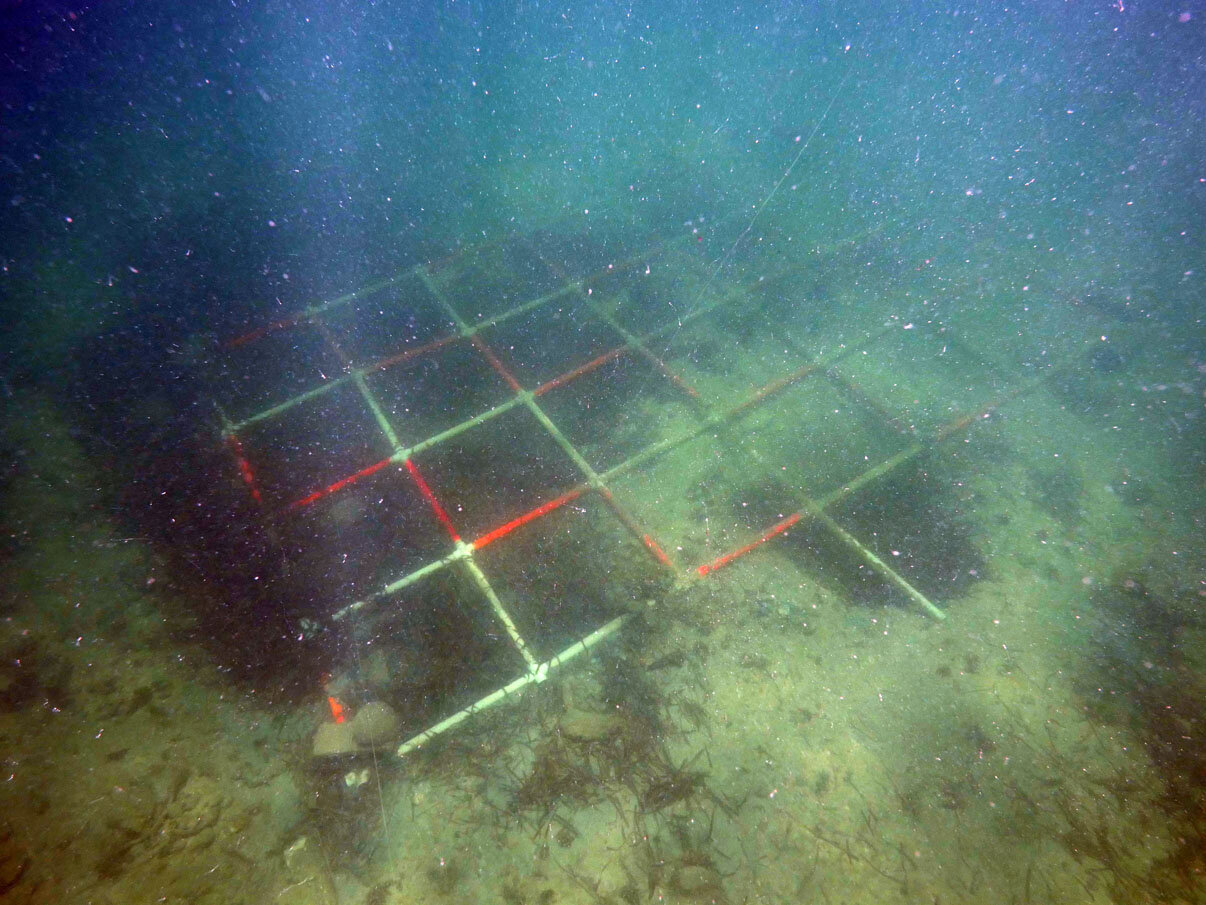
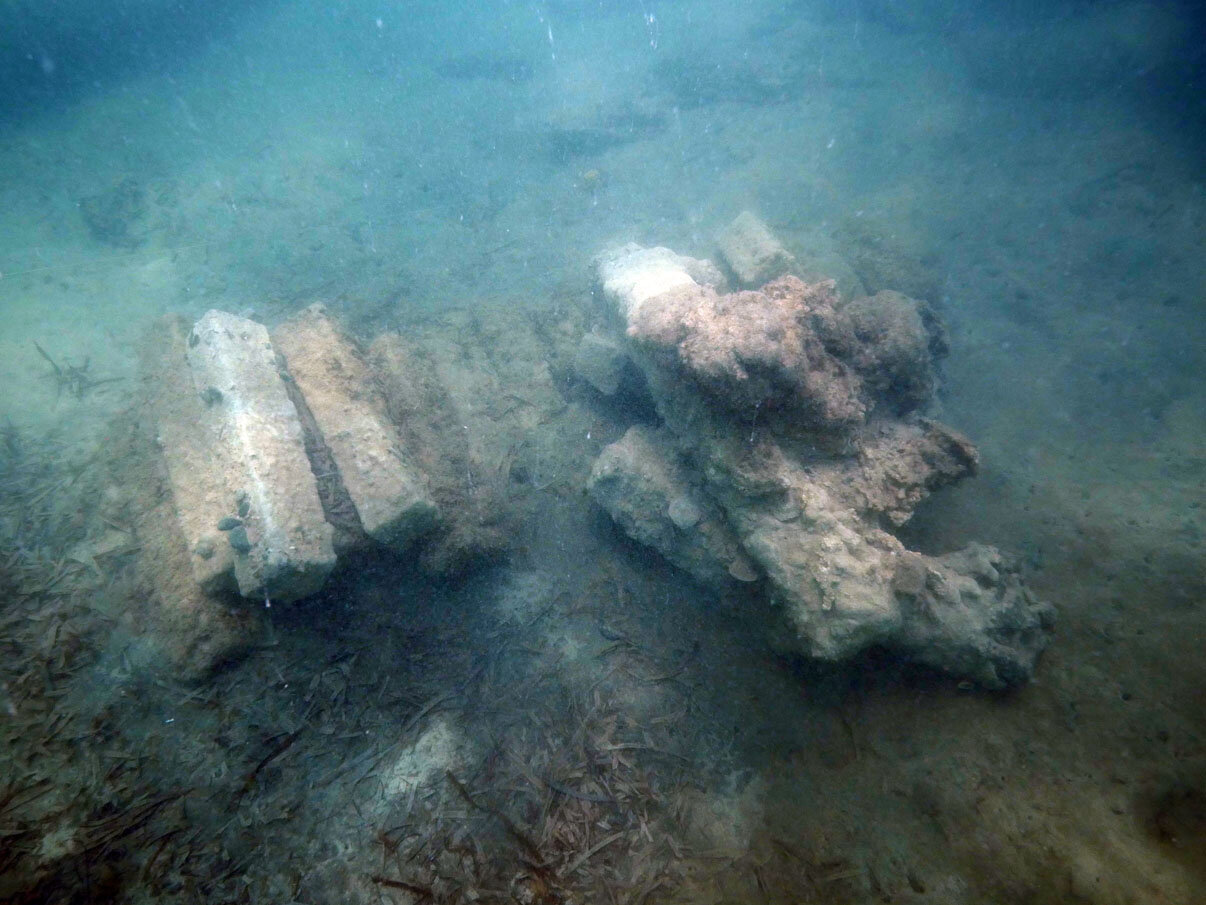
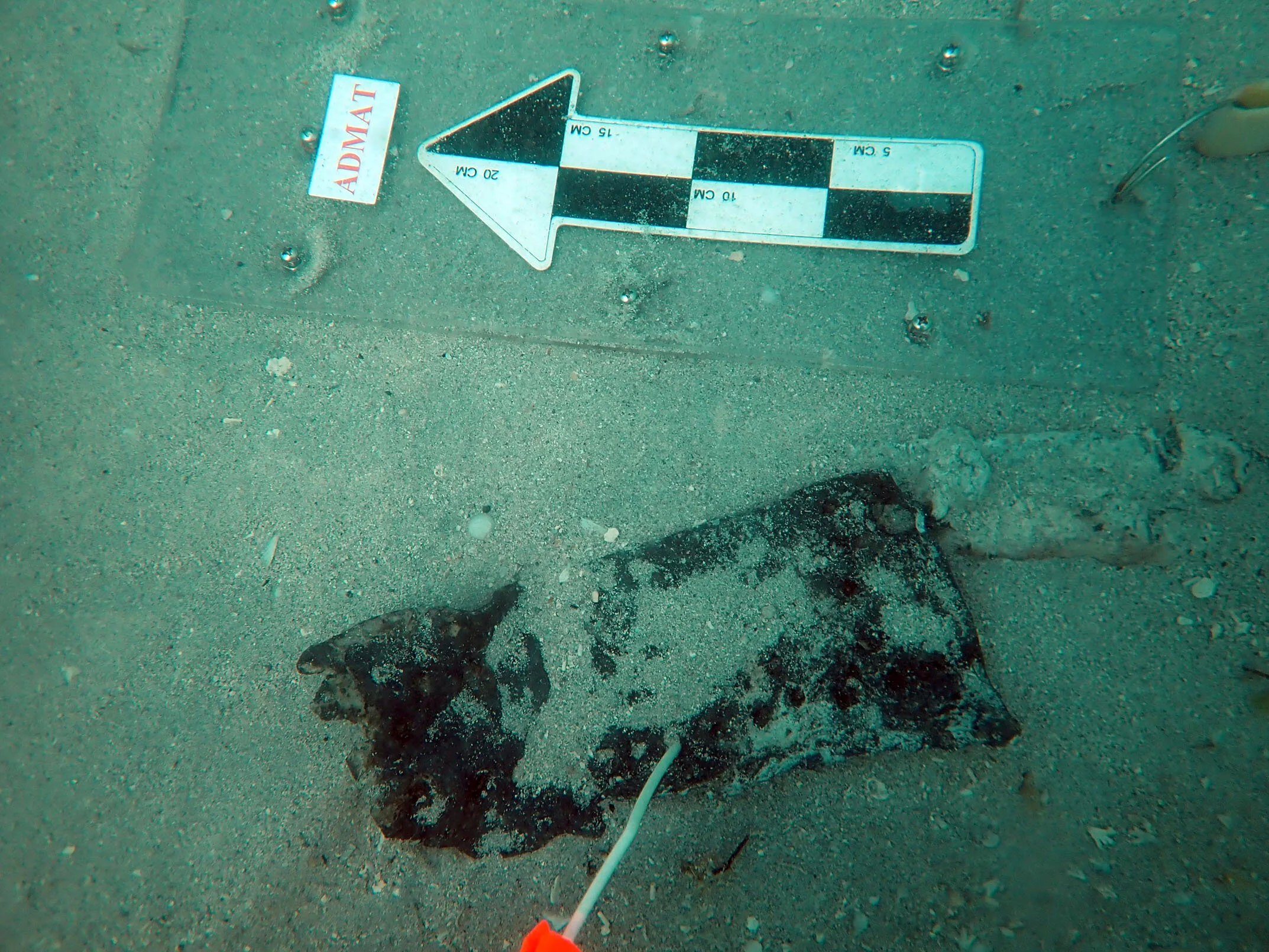
The gudgeons which had been located in the 2018 and 2019 survey were documented in position and then were removed from the site and taken back to ADMAT’s Maritime Archaeological Centre for security and conservation and documentation. A small number of iron ballast bars two small and two large were also recovered. The remainder which was located in the grid area was measured and then removed and placed in a line next to the break section. This enabled metal detector and gradiometer survey work, to continue on the grid without having the magnetic influence of the ballast bars.
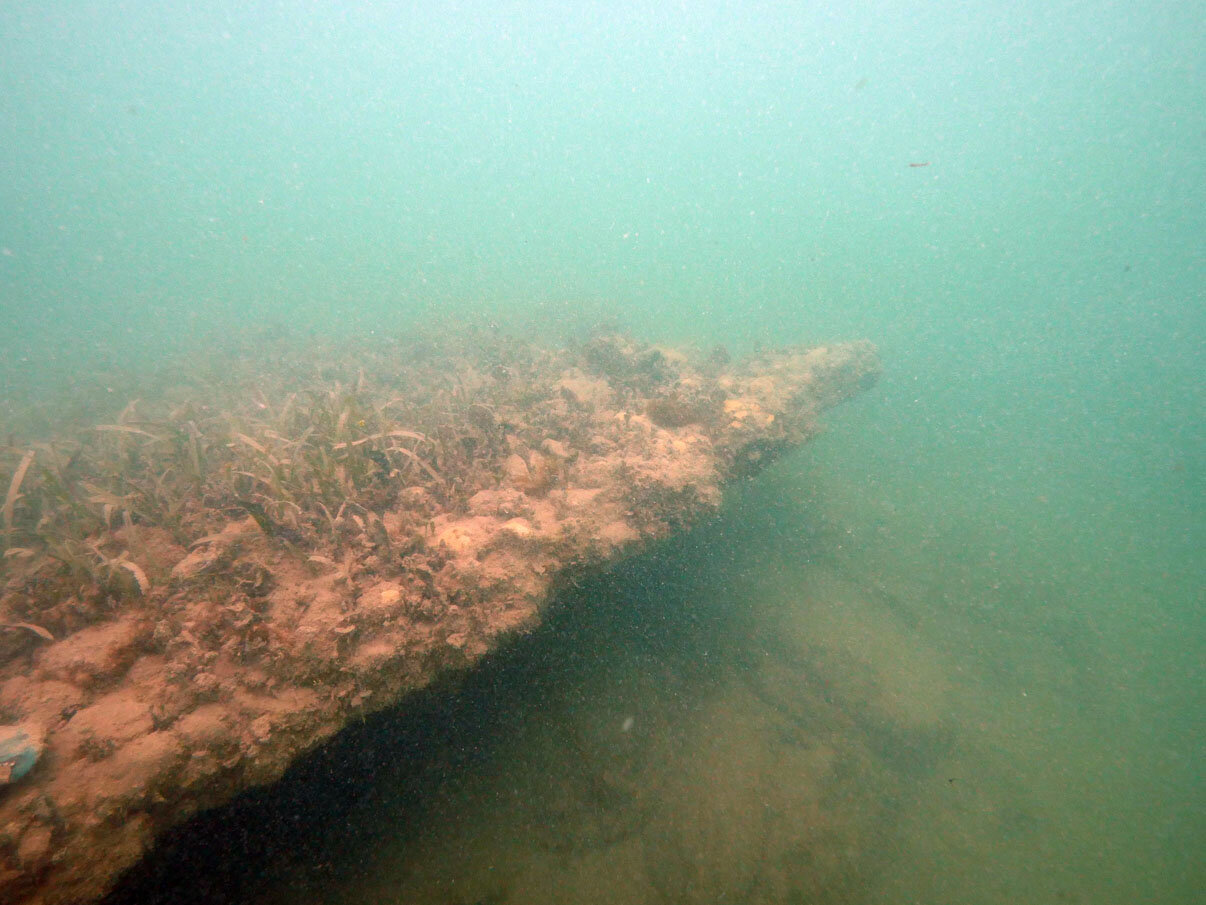
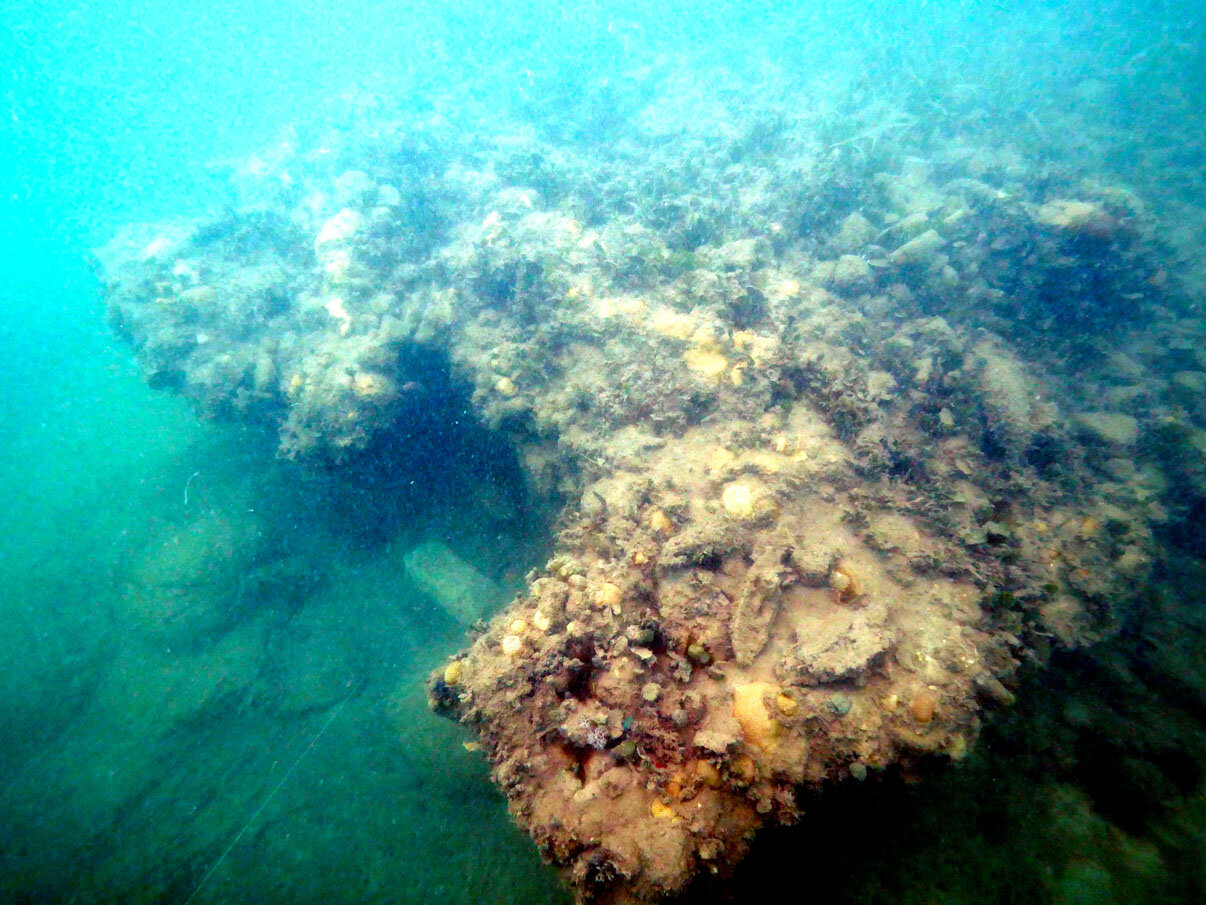
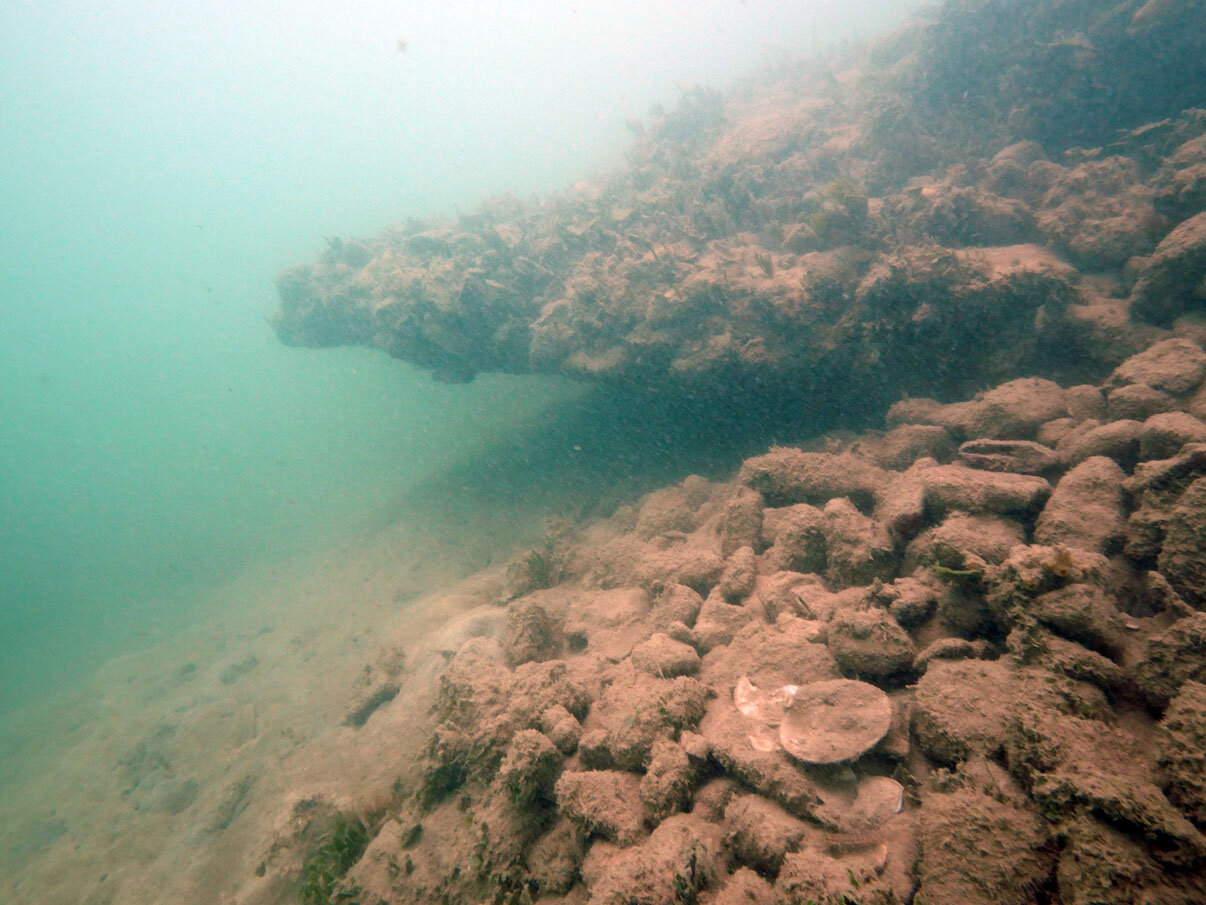
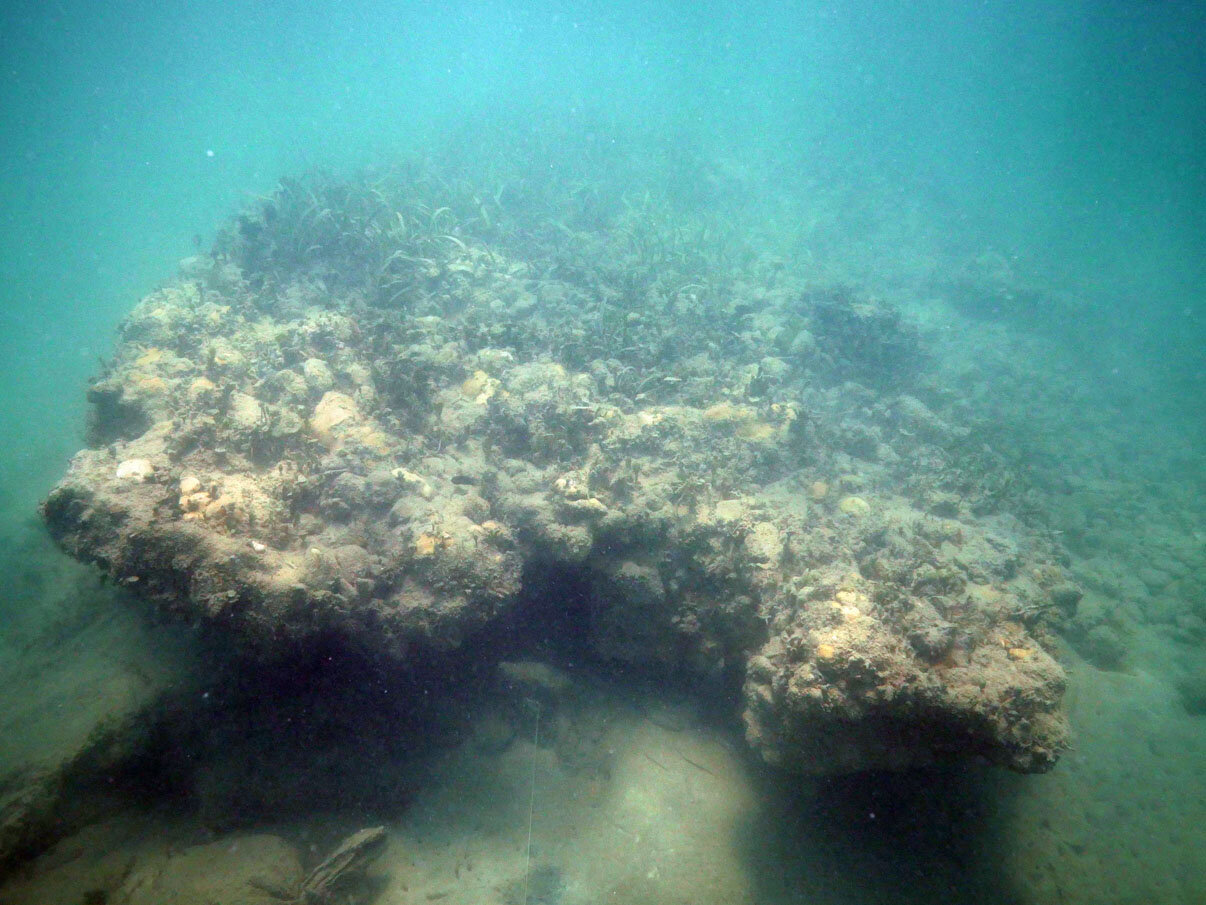
One important find was the realisation for the reason why the front to the amidship section of the hull had remained in shape. The iron ballast bars the way they had been stacked in the lower hull had concreted together forming a mould of the hull shape. On the port side, most of the hull planking had gone from the second/ third futtock up and towards the break amidships where the shot locker and mainmast would have been the port side of the hull planking was mainly gone. But the iron ballast was stuck together and that held the weight of the ballast and cannons together and had not allowed the ship to disintegrate. On the starboard side, the hull planking was buried deep in the mud and therefore a section of hull planking with the copper sheeting had remained from the keel to the turn of the builge. The iron ballast bars seemed to stop at the forward mast area where just stone ballast was used and the weight of the brick galley which appeared to be in the bow.
Storms and heavy wave action over the centuries had washed most of the upper section of ballast stones (these were pebbles from the Calais area as confirmed by ADMAT-FRANCE infra-red scientific investigation) from the port side which is seaward, over the top and down on the starboard side, which was angled lower than the port side.