
Le Dragon Wreck 2019 Project
The Wreck Site Continued.
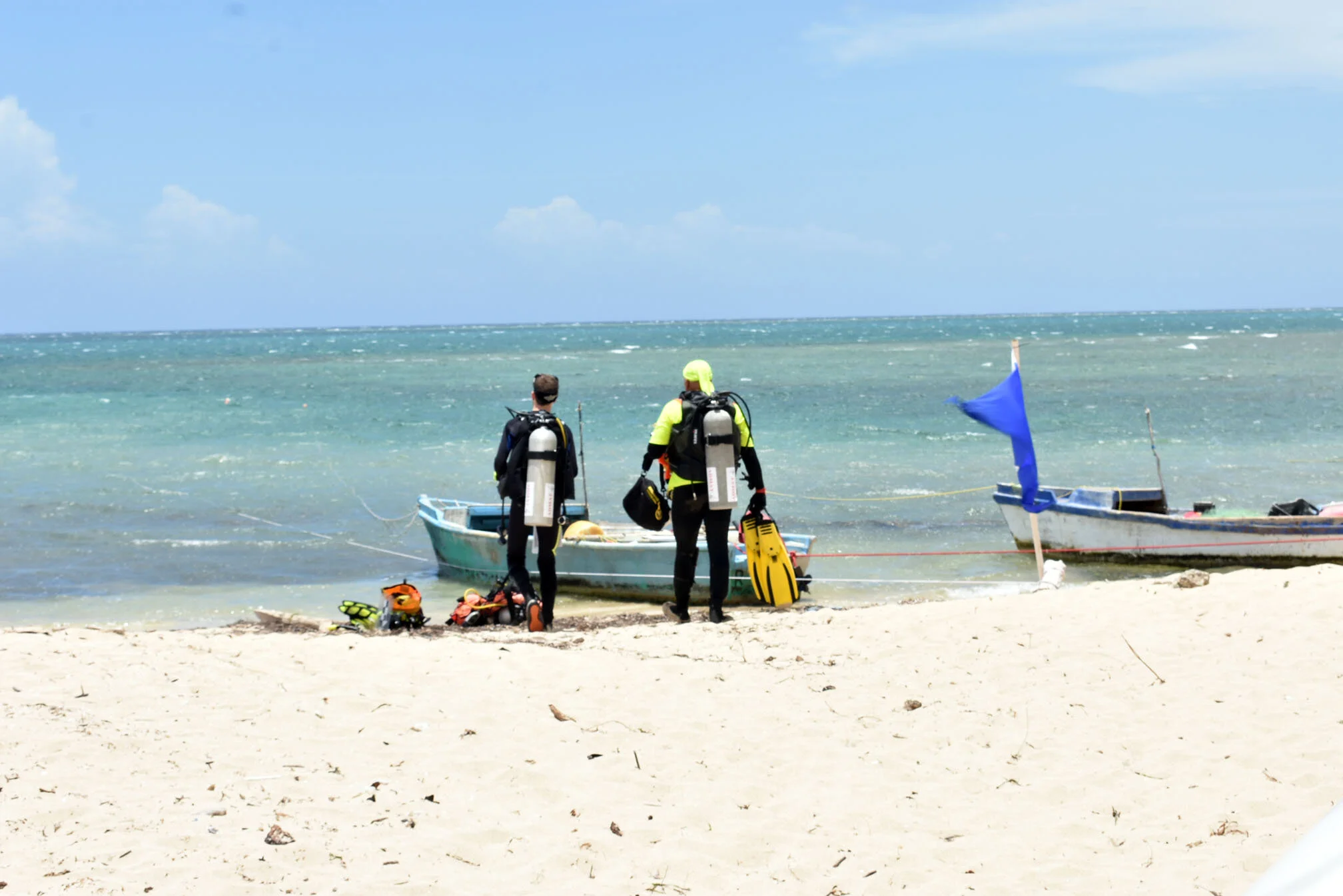
The day always starts with one of the Team doing the Health & Safety Briefing which is very important since there are a number of factors affecting the Team when they are spending about 5 hrs underwater.
Raimund Krob started using the drone for ariel surveys. This year it was fitted with a polarising filter on the lens to see if the drone could video through the water. It is very useful to keep the wreck site in perspective and to visualise the site in contrast with the reefs on either side.
The last remaining Gudgeon was recovered and the geophysical survey continued.
It was great to have the Director-General Juan Lopez and Director Francis Soto from ONPCS come an join the archaeological project. ONPCS is the government department in the Ministry of Culture responsible for all the historic shipwrecks and for maritime archaeology and the protection of the Underwater Cultural heritage in the Dominican Republic. They arrived late in the evening and were given a detailed briefing by Dr Spooner and then they stayed with the project for three days.
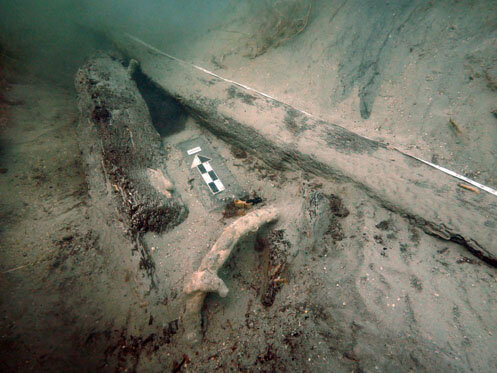
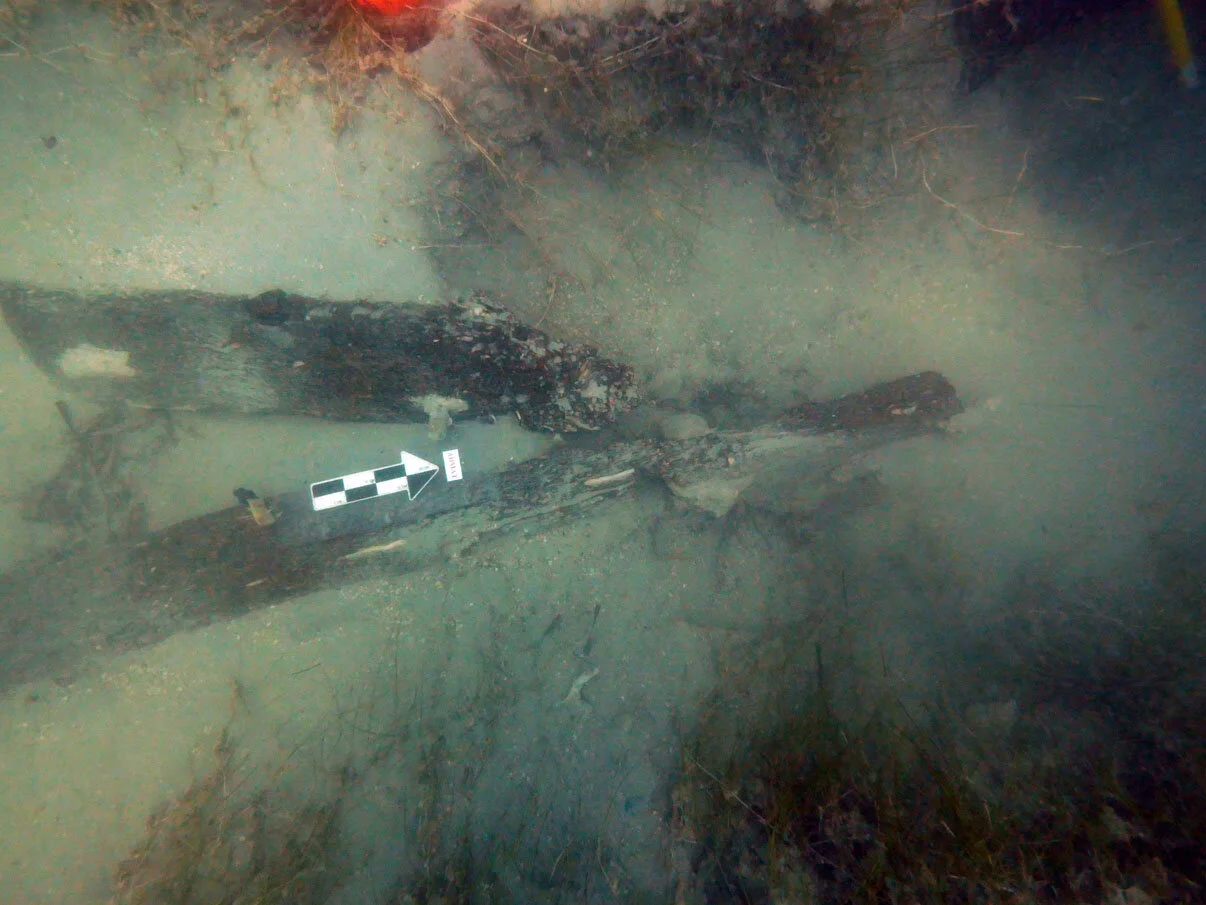
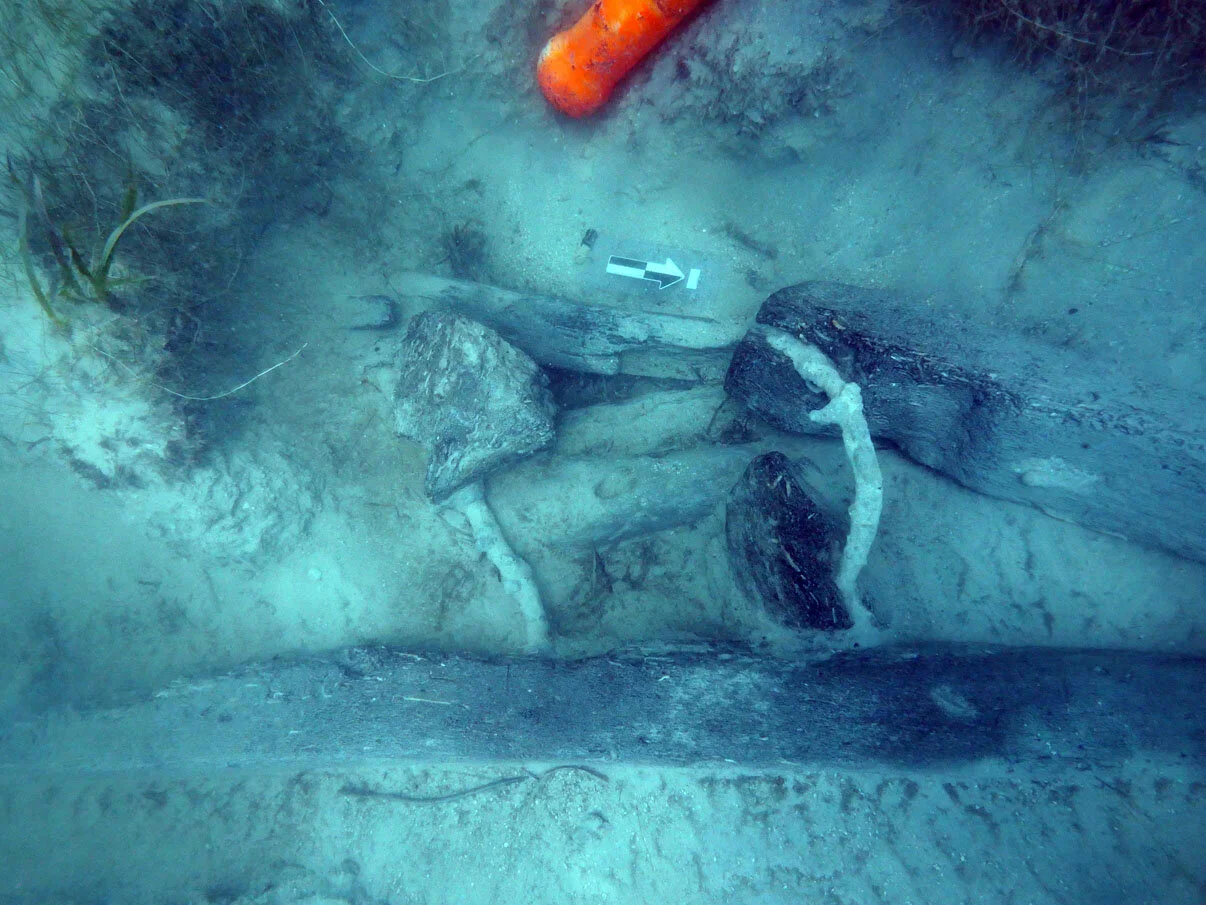
It was very good timing as while they were there the team found the keel extension. There was a working hypothesis by Dr Spooner that the ship was extended to around 100ft in length when it was repaired in Boston. However, the archives do not confirm the exact length. We know that a new mizzen mast was added and the original length of the ship would have been too small to warrant this. The ship was originally built in 1776 at the same time as the Hancock, Raleigh and Virginia, and was one of the first warships of the American Continental Navy. The length comparables are very close between these ships and as they were all built in the same shipyard, there was a probability that Le Dragon, when it was refurbished, was not only extended but also major changes made. We know that the iron ballast bars were added and she was totally re-ballasted. As some of the lower hulls were used they would have to extend the keel and keelson. the usual method of joining two sections of keel or keelson is by cutting a diagonal scarf.
So to locate a 17 ft section of the keel and keelson with remains of floors over 53 meters away from the break in the hull by the main mast was an important find supporting the hypothesis and proving the dragon was extended. We currently are working on the hypothesis that this section of lower hull was part of the rear section (from the mainmast step to the sternpost) which was blown up and landed 53 meters away.